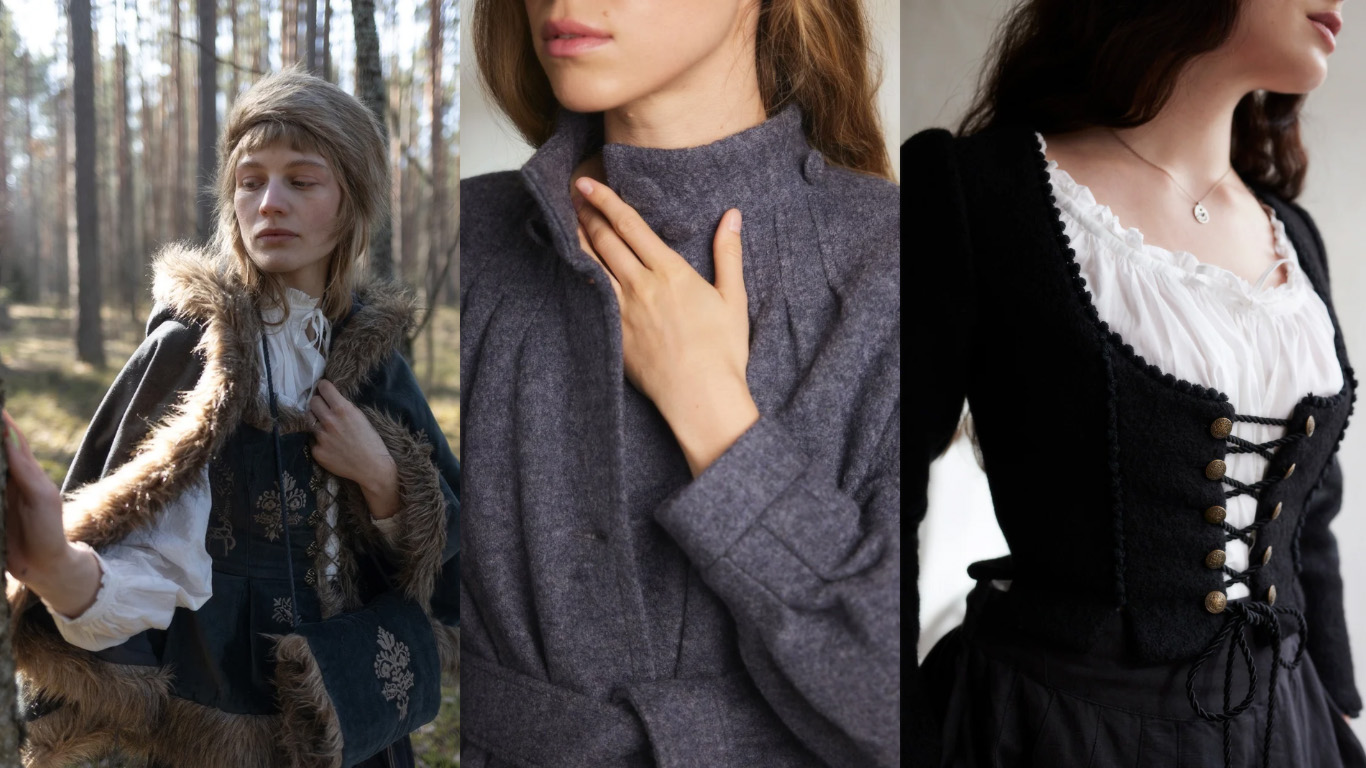
Autumn is the season that exposes the weaknesses of a fast fashion wardrobe most clearly. The temperature drops, the layering begins, and the lightweight synthetic pieces that filled the summer months suddenly look insufficient and feel wrong. The solution fast fashion offers is to buy more: a new jacket, another knit, something in an autumnal colour that will be discounted by November. This cycle is familiar and it is avoidable.
Dressing well for autumn without buying fast fashion requires a different approach: fewer pieces, chosen for material and construction, that work across the season and beyond it. What follows is a practical framework for doing that.
Understand What Autumn Actually Requires
Autumn is a transitional season with a wide temperature range. Early autumn can feel like a continuation of summer; late autumn approaches winter. A wardrobe that handles this range needs pieces that layer effectively, that work both alone and in combination, and that are made from fibres that respond to temperature rather than trapping it.
Natural fibres are better suited to this than synthetics for a straightforward reason: they breathe and regulate. Wool and wool blends absorb moisture and release it, keeping the body at a more stable temperature than polyester, which traps heat and humidity. Linen, though associated with summer, layers well in autumn under heavier pieces. Cotton, depending on weight, sits in the middle: lighter cotton for base layers, heavier cotton for mid-layers.
The practical implication is that an autumn wardrobe built on natural fibres will be more comfortable across a wider temperature range than one built on synthetics, even if the synthetic wardrobe contains more pieces. Material quality reduces the need for volume.
Start With Outerwear: The Piece That Does the Most Work
In an autumn wardrobe, outerwear is the single most important investment. It is the piece worn most consistently across the season, it frames everything beneath it, and it is where construction quality is most visible. A well-made coat or jacket in natural wool or lined linen will outlast ten fast fashion alternatives and improve with age rather than deteriorating.
When evaluating autumn outerwear, the questions to ask are about construction rather than trend. Is it lined? What is the interlining? How are the seams finished? Does it have structure at the shoulder or does it rely on the body beneath for shape? These details determine how a coat wears over years, not just how it looks in the first week.
Folk-inspired outerwear, in particular, tends to be built with more construction logic than trend-driven alternatives. The jackets and coats collection applies the same craft approach as the rest of the range: natural fibres, considered construction, pieces designed to be worn for seasons rather than weeks.
The Role of Knitwear in an Autumn Wardrobe
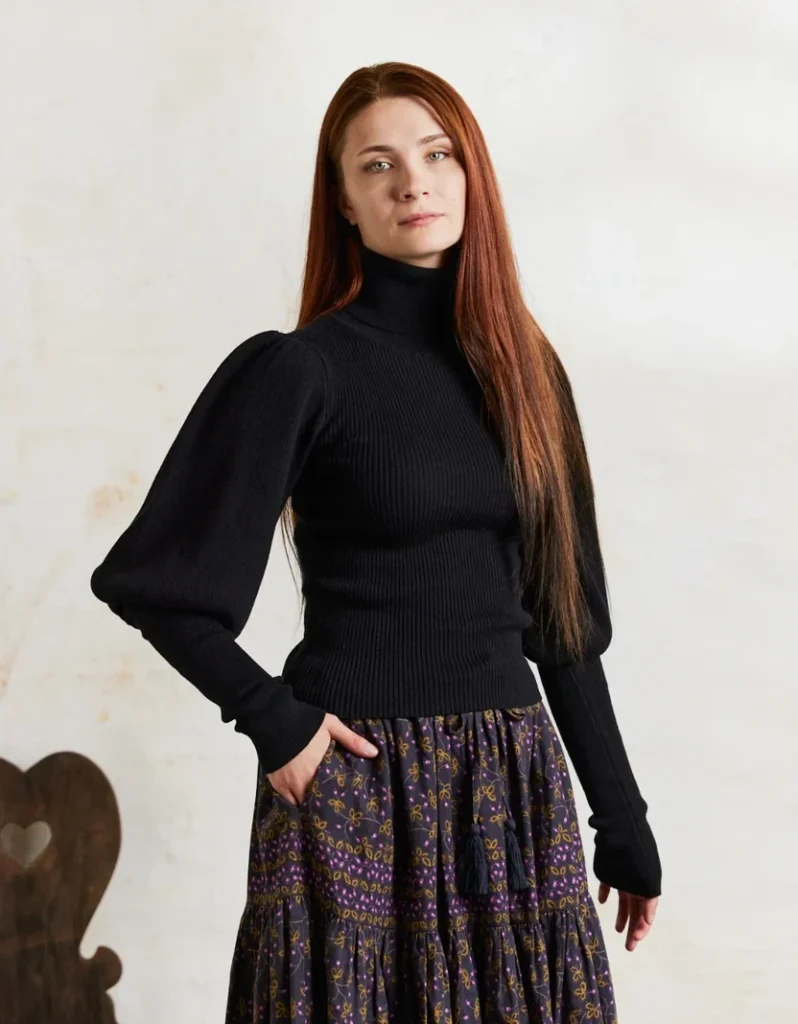
Knitwear is the mid-layer of an autumn wardrobe. It sits between a base layer and outerwear, adds warmth without bulk, and in natural fibres, regulates temperature in a way that synthetic fleece cannot. The difference between a wool or cotton-cashmere knit and an acrylic one is immediately apparent in wear: natural knitwear breathes, synthetic knitwear does not.
Wool is the most functional natural fibre for autumn knitwear. It is warm, durable and naturally water-resistant to a degree that makes it practical in unpredictable autumn weather. Merino wool sits next to skin without irritation; heavier wools are better as outer knits worn over a base layer. Cotton-cashmere blends offer a softer, lighter alternative suited to the earlier part of the season.
Construction matters in knitwear as much as in woven garments. A tightly knitted piece in good-quality natural yarn will hold its shape across seasons. A loosely knitted piece in poor-quality yarn will stretch, pill and lose its form within a few months. The weight of the yarn and the density of the knit are visible indicators of quality before you even check the label.
For autumn knitwear in natural fibres that follows the same craft logic as the rest of a considered wardrobe, the knits collection offers pieces in cotton-cashmere and natural fibres designed to layer and last.
Layering Logic: How to Build an Autumn Outfit
The layering system that works best in autumn is the same one that underlies European folk dress traditions: a base layer in linen or cotton, a mid-layer in knit or a lighter structured piece, and an outer layer in wool or heavier fabric. Each layer serves a function, and the combination can be adjusted as the day and temperature change.
In practice this means thinking about outfits as systems rather than individual pieces. A linen or cotton blouse is not just a blouse; it is a base that works under a knit, under a corset, under a jacket. A knit is not just a knit; it is a mid-layer that adds warmth when the jacket comes off. The pieces work together, which is why coherence across a wardrobe matters more than individual statement pieces.
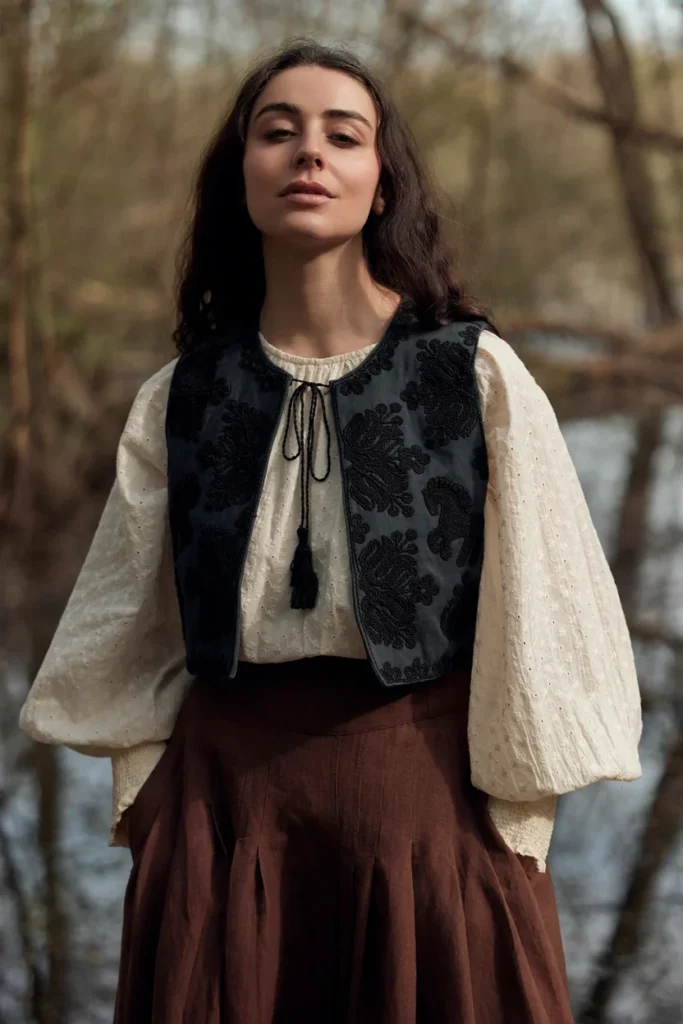
Folk-inspired silhouettes are particularly well suited to this approach because the layering logic is built into the tradition. An embroidered blouse under a structured bodice under a coat is a historically coherent combination, and it is also a practically functional one for autumn dressing. The layers are not redundant; each one does something.
Colour and Texture in Autumn Dressing
Autumn dressing in natural fibres does not require an entirely autumnal colour palette, though natural fibres tend to produce colours that sit well in the season. Undyed or naturally dyed linen in buckwheat, natural white or chestnut reads as autumn without being forced. Velvet in moss green, deep indigo or tile carries colour depth that flat-woven fabrics in the same shades cannot match.
Texture is as important as colour in autumn. The combination of a smooth linen base with a knitted mid-layer and a woven outer coat creates visual interest through texture contrast rather than colour contrast. This is quieter than trend-driven autumn dressing, which tends toward statement colour, but it is more durable as an aesthetic because it does not depend on what is currently popular.
Natural fibres also age into their colours in a way synthetics do not. A linen garment that has been washed and worn through several autumns has a colour depth and surface character that a new garment in the same shade does not. The material records its own history, which is part of what makes it worth investing in.
What to Buy, When to Buy It, and What to Avoid
The most common mistake in building an autumn wardrobe without fast fashion is waiting too long. Considered pieces in natural fibres and limited production sell through quickly at the start of the season. By mid-autumn, the best options are often gone, which creates the pressure to buy something available rather than something right. Buying at the threshold of the season, before that pressure builds, is how availability is secured.
What to avoid is equally clear: synthetic outerwear that will not breathe, acrylic knitwear that will pill and stretch, and trend pieces in autumnal colours that will not work in any other context. The test for any autumn purchase is whether it will still be worn in three autumns. If the answer is uncertain, the purchase is probably wrong.
For those building or refreshing an autumn wardrobe with pieces that meet this standard, tracking what arrives at the start of the season is the most reliable approach. The new in section reflects the seasonal rhythm of the collections, with autumn arrivals that follow the craft and material logic of the range rather than a trend calendar.
The Autumn Wardrobe as a Long-Term Project
An autumn wardrobe built on natural fibres and considered construction does not come together in a single season. It accumulates over years, as the right pieces are found and added, as some things are retired and others become central to how you dress in the colder months.
The measure of a successful autumn wardrobe is not how many pieces it contains but how reliably it works. If every October you find yourself reaching for the same coat, the same knit, the same layering pieces, and they still perform and still feel right, the wardrobe is doing its job. That kind of reliability is what natural fibres and craft construction make possible, and it is entirely unavailable from fast fashion, regardless of how much of it you buy.